


Sustainable Finance Achievement
Cumulative support 2023–2025, broken down by type and sector

223,487
Million THB

Commercial Real Estate44%

Renewable Energy30%

Electric Vehicles13%

Chemicals & Materials8%

Other Industries5%
Data as of July 2025, based on cumulative new sustainable loan approvals and sustainable bond underwriting during 2023–2025.
Progress Toward Target
✓ Original Target · 2023–2025
150,000 Million THB
Target Achieved ✓
Cumulative new sustainable loan approvals and sustainable bond underwriting totalling THB 223,487 million — surpassing the 2023–2025 target.

Extended New Target

● Extended Target · 2023–2030
500,000–550,000 Million THB
In Progress
Progress
44%
As of 2025 · Target end date: 2030
SCBAM · Sustainable Fund AUM
21,955
Million THB · As of end 2025
SCBAM became a UN PRI Signatory since 2024.
Hospitality Sector · New Credit Lines 2023–2025
40,000+
Million THB · Total hospitality portfolio >130,000M THB
Sustainable Finance
Siam Commercial Bank is committed to integrating environmental, social, and governance (ESG) considerations into the financing activities, the development and delivery of comprehensive financial products and services, as well as its investment practices. This integrated approach enables the Bank to respond to the diverse needs of customers while simultaneously managing environmental and social impacts.
Sustainable Finance Structure and Instruments Framework
SCB has established a Sustainable Finance Framework to serve as a structural mechanism for designing, developing, and allocating financial instruments. This framework is aligned with the specific needs and contexts of all client segments — ranging from large corporations and SMEs to individual retail customers. Our objective is to drive economic growth in tandem with risk management and long-term value creation, categorized as follows:
💳
Part 1
Sustainable Lending & Bond Underwriting
Sustainable Finance and Bond Underwriting

This framework encompasses financial instruments in the form of loans and bonds, designed with flexibility to suit customers' varying levels of readiness at different stages of development. The framework integrates diverse support mechanisms, such as financial incentives, preferential interest rates, performance-linked contract structures, and the provision of expert advisory and knowledge sharing. These initiatives ensure clients can access capital to effectively upgrade or pivot their business models. To ensure credibility, transparency, and auditability, SCB has established clear definitions, standards, and criteria aligned with internationally recognized principles and best practices, supported by systematic governance, monitoring, and reporting processes to mitigate greenwashing risks.

🌿 Green Financing
Green (Environmental) Financing
Provides financing for environmentally beneficial activities, including greenhouse gas mitigation, transition to a low-carbon economy, climate adaptation, and the development of the blue economy.
🤝 Social Financing
Social Financing
Supports projects or activities that generate positive social outcomes, such as improving quality of life, enhancing access to essential services, and promoting social inclusion and equity.
🔗 Sustainability-Linked
Sustainability-Linked Financing
Offers financing with financial terms linked to the sustainability performance of the borrower, creating incentives for measurable and long-term improvements in sustainability outcomes.
📈
Part 2
Sustainable Investing
Sustainable Investing — SCBAM

Siam Commercial Bank, through SCB Asset Management Company Limited (SCBAM), is committed to supporting sustainable investment as an institutional investor, with a focus on non-proprietary client services that generate investment returns while driving economic and social transition toward sustainability (ESG Transition). ESG factors are integrated into the investment process to enhance opportunities for long-term, sustainable returns and to mitigate risks associated with ESG considerations. This approach is applied in a manner consistent with investment objectives, mandates, and constraints, and is guided by fiduciary duty as a core principle. Through the adoption of sustainable investment practices, SCB seeks to achieve both investors' financial objectives and broader positive impacts on society and the environment.

🎯
Sustainable Investment AUM as of end 2025
21,955 Million THB

Energy Transition Fund
🌍
Positive Impact Fund
🚗
EV-Related Fund
🏆
UN PRI Signatory since 2024
Core Strategy
Trusted Partner for Transition
Siam Commercial Bank is committed to developing a comprehensive sustainable finance ecosystem to elevate its role as a "Trusted Partner for Transition," accompanying customers throughout their sustainability journey — from understanding each business's starting point and readiness, through capital raising and operational transformation implementation, to progress monitoring and scaling toward long-term growth. This commitment is driven through three core approaches:
1. Financial Solutions with Tailored Incentives and Terms

SCB designs flexible financial products and instruments tailored to each client's transition readiness and specific objectives. These solutions support investments in decarbonization, climate risk adaptation, and supply chain enhancement, integrating appropriate incentives, competitive interest rates and fees, and sustainability performance-linked conditions. This approach helps ensure that the transition is both practical and sustained over time.

Financial Support for Customers Across Business Segments
🏢
Corporate Customers

In 2025, SCB continued to support corporate clients through sustainability-linked financing, encompassing the service, tourism, and diverse renewable energy sectors. This was complemented by sustainable finance advisory services, as well as the Bank's ongoing role as a joint underwriter for environmentally focused bond issuances.
Product Examples and Customer Support
Sustainability-Linked Loan (SLL)
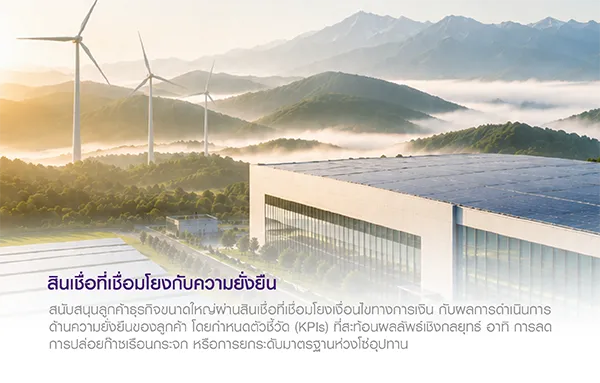
SCB supports large corporate clients through sustainability-linked loans, where financial terms are tied to the clients' sustainability performance. Key performance indicators (KPIs) are designed to reflect strategic sustainability outcomes, such as greenhouse gas emissions reduction or the enhancement of supply chain standards.
Sustainable Bond Underwriting
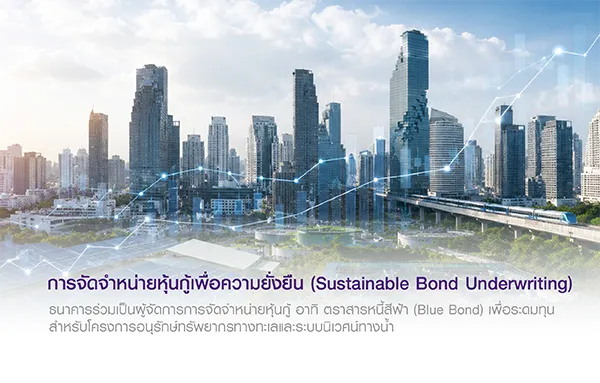
The Bank serves as underwriter for sustainable bonds, including Blue Bonds, to raise capital for marine resource conservation and aquatic ecosystem projects.
PM 2.5 Reduction Loan
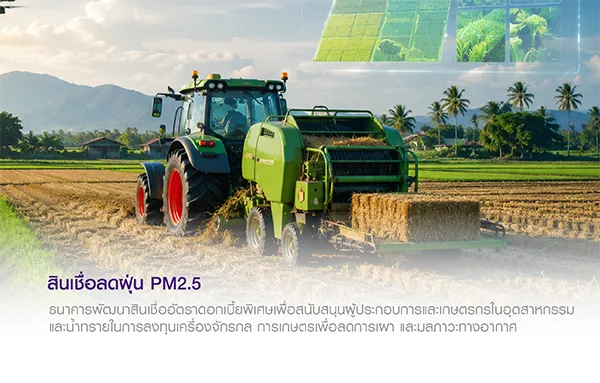
The Bank has developed preferential interest rate loan products to support entrepreneurs and farmers in the sugarcane and sugar industry in investing in agricultural machinery to reduce crop burning and air pollution.
🏭
Small and Medium-sized Enterprises and Small and Micro Enterprises (SME/SSME)

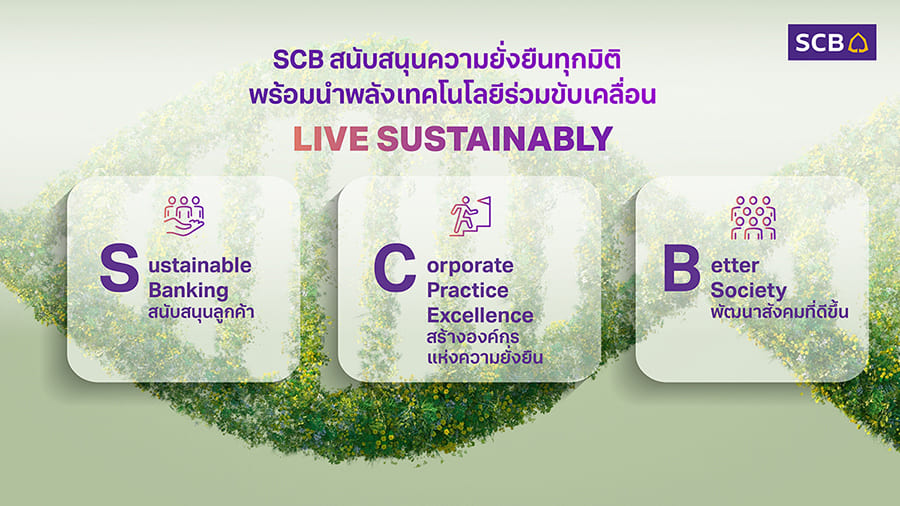
Small and Medium-sized Enterprises (SMEs) and Small and Micro Enterprises (SSMEs) are integral to Thailand's economic growth across multiple dimensions, including value creation, labor market development, and export sector support. The Bank is dedicated to supporting environmentally conscious SMEs and SSMEs by providing access to capital with preferential interest rates and special terms. This support aims to strengthen business readiness and enhance long-term competitiveness amid the transition to a low-carbon economy.
Product Examples and Customer Support
SCB Sustainable Financing for SME
Designed for SMEs committed to environmentally friendly operations; this solution offers access to capital with special incentives. It empowers businesses to improve, develop, and build the capacity needed to navigate the transition toward a low-carbon economy.
Green Forward
This initiative supports eco-friendly businesses and projects focused on energy efficiency, pollution prevention and control, and green supply chains. It also extends to businesses providing environmental management and sustainability consultancy services.
Sustainability Loans for the Hospitality Sector
Provide enhanced financial support to hotel businesses investing in energy efficiency improvements or implementing environmentally and socially responsible operations.
🏠
Retail Customers

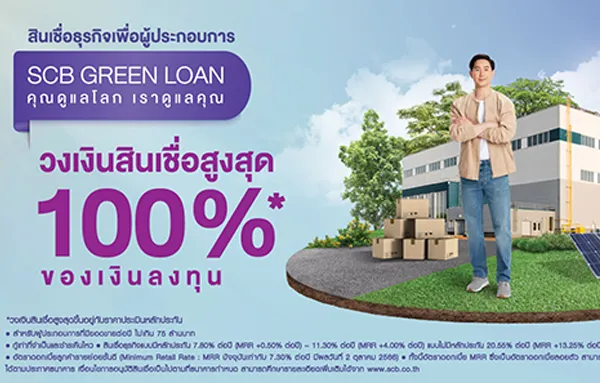
The Bank promotes sustainable lifestyles among retail customers by encouraging environmentally friendly mobility, the use of renewable energy, and energy efficiency. These efforts are supported through ongoing collaboration with partners across various sectors to continuously develop auto loans and housing loans for environmental sustainability.
Product Examples and Customer Support
Clean Mobility
Supporting loans for sustainable travel through partnerships with capable allies and the development of comprehensive financial solutions for the electric vehicle ecosystem.
SCB Home Loan: Green Energy
Supporting loans for environmentally friendly homes, energy-efficient homes, covering purchases, construction, and renovations to install solar rooftops, including energy-saving equipment or technology.
📊
Asset Management Business Group

Under the Sustainable Finance Framework and Instruments, SCB has expanded the role of financial solutions to include investment management for customers through SCB Asset Management Company Limited (SCBAM). SCBAM has applied responsible investment principles since 2014 and has progressively evolved toward sustainable investing. In 2024, SCBAM joined as a signatory to the UN Principles for Responsible Investment (PRI), demonstrating its commitment to sustainable management and investment.

With the principle of managing investments to deliver the best returns to investors and create positive impacts for everyone, SCBAM has established a good governance structure, such as establishing a Sustainable Executive Committee to set guidelines and consider operational strategies, while using ESG factors as part of the investment and risk analysis and consideration, based on fiduciary duty. In addition, it has continuously developed sustainable investment management guidelines, whether developing tools or metrics for the sustainability performance of invested companies, setting targets, developing measurement systems and reporting, or promoting understanding and creating a culture that emphasizes ESG factors.

21,955
Million THB in assets under management (AUM) in sustainable funds as of end 2025
SCBAM offered customers a total of 21,955 million THB in assets under management (AUM) in sustainable funds in 2025.
Sustainable Fund Coverage
🌱 Funds related to energy transition
🤝 Funds that aim to create positive impacts on society and the environment
⚡ Funds related to electric vehicles
🏆 UN PRI Signatory since 2024
SCBAM joined the UN Principles for Responsible Investment, demonstrating its commitment to sustainable investment management at the international level.
2. Capability Building and Transition Advisory

SCB supports customers through practical knowledge and advisory services across the full transition journey, including the assessment of ESG-related risks and opportunities, the formulation of transition targets and plans, the enhancement of measurement and disclosure practices, and preparedness for relevant standards and regulatory requirements. These efforts enable customers to make more informed investment decisions, reduce transition-related barriers, and strengthen long-term competitiveness.

In 2025, the Bank designed activities and programs addressing entrepreneurs' challenges in the context of economic, technological, and sustainability transitions. These initiatives help customers assess their own opportunities and risks while preparing for access to the Bank's sustainable financing in subsequent phases. Key programs include:

Global Trade ESG Standards
SCB ITP Batch 7 — The NextWave Exporters: AI & ESG in Action
Strengthening the capabilities of export-oriented SMEs through in-depth knowledge of market analysis, business planning, logistics, and international trade regulations, alongside the application of AI and ESG principles. The program enables entrepreneurs to expand into international markets more effectively while achieving sustainable growth.
Energy Saving Lean Process
Future Smart Reduction Bootcamp — SME Efficiency Bootcamp
Supported SMEs in cost reduction and operational efficiency enhancement through effective resource management, with a focus on lean processes, energy efficiency, and the integration of ESG considerations into production processes. The program enhances competitiveness and prepares businesses for access to sustainable finance.
Digital Transition Data Driven
SCB KX — SME Navigator to Tech-Driven Growth
Supported SMEs in adopting technology and innovation, including AI and data analytics, to address real business challenges. The program combines hands-on learning, expert advisory, and connections to technology and financial partners to strengthen capabilities and enable sustainable, technology-driven growth.
AI Decision Paradox Mindset
SCB IEP 19 — Paradox CODE: Leadership in the AI Age
Enhanced SME leadership capabilities to enable effective decision-making amid complexity and uncertainty in the modern business environment. The program applies paradoxical leadership concepts and AI-driven tools to improve efficiency, reduce costs, and support balanced decision-making in the face of competing priorities.


📎 Further Information
Further details and additional initiatives are available at: https://www.scb.co.th/th/sme-banking/events-listing
3. Synergizing Partnerships and Building Collaborations to Drive Sustainability through Business Ecosystems

SCB has elevated the role from customer engagement to system-level collaboration with industry players and regulatory authorities to advance transition finance and sustainable finance at the national level. This includes active knowledge exchange among financial institutions and climate-focused networks, as well as participation in the development of policy frameworks and disclosure standards. Through these collaborative efforts, the Bank contributes to shaping practical standards, guidelines, and enabling ecosystems that support customers in navigating their sustainability transition effectively.

Highlight in Actions: Driving the Transition Through an Integrated Ecosystem – Hospitality Sector

The Bank recognizes the hospitality sector as a core strategic industry for SCB, given its extensive linkages to service supply chains and its pivotal role in Thailand's tourism-driven economy. At the same time, the sector faces a notable transition gap, requiring improvements in operational standards, resource management, and capital investment to enhance efficiency and sustainability. Currently, the Bank's outstanding loan portfolio in the hospitality sector exceeds THB 130,000 million.

1
💰
Pathway 1
Comprehensive Sustainable Finance for All Segments
Providing sustainability-linked financing to hotel clients across all tiers, including both corporate and SME customers, covering new and existing projects. Preferential interest rates are offered to support investments in recognized certifications and operational upgrades, such as Green Building Certification, Green Operating Certification.
2
📚
Pathway 2
Raising Awareness and Providing Knowledge
Delivering training, seminars, and sustainability learning materials to support hotel operators in assessing risks and developing transition plans.
3
🤝
Pathway 3
Leveraging Expert Partnerships
Collaborating with expert partners in green buildings, green operations, and greenhouse gas emissions measurement, together with SCB Protect and CardX, to provide benefits to users of G-Green certified hotels.

From Strategy to Action: ตัวอย่างการขับเคลื่อนจริงในภาคโรงแรม ธนาคารได้ร่วมมือกับผู้ประกอบการโรงแรมในการนำแนวทางการเงินเพื่อการเปลี่ยนผ่านไปสู่การปฏิบัติจริง ครอบคลุมทั้งการลงทุน การยกระดับประสิทธิภาพการดำเนินงาน และการพัฒนามาตรฐานด้านความยั่งยืนอย่างเป็นระบบ


การเริ่มต้นเส้นทางโรงแรมสีเขียว
การยกระดับมาตรฐานโรงแรมผ่าน Green Certification และการสนับสนุนด้านการเงิน


การปรับปรุงการดำเนินงานเพื่อเพิ่มประสิทธิภาพ
การลงทุนด้านพลังงานและการบริหารจัดการทรัพยากรเพื่อลดต้นทุนและลดการปล่อยก๊าซเรือนกระจก


ความร่วมมือเพื่อขับเคลื่อนการเปลี่ยนผ่าน
บทบาทของพันธมิตรและ ecosystem ในการสนับสนุนธุรกิจโรงแรมอย่างครบวงจร


40,000+
Million THB new financing approved under the transition finance
framework for hospitality sector clients 2023–2025

SCB signed a Memorandum of Understanding (MOU) with the Department of Climate Change and Environment to support operators awarded the G-Green certification mark. The initiative also promotes the Green Hotel Plus certification, an internationally recognized standard, and was initially launched in Phuket and the Andaman provinces.
Green Hotel Plus (GHP): The SCB Model for Systematic Hospitality Transition

Siam Commercial Bank, in collaboration with strategic partners, has developed the Green Hotel Plus (GHP): SCB Model to support hotel operators in undertaking a structured and measurable sustainability transition. The initiative is based on the Green Hotel Plus criteria, which are internationally recognized by the Global Sustainable Tourism Council (GSTC).

47
Hotels participating in the pilot program
10+
Strategic Partners from both public and private sectors
GSTC & GSTC-Recognized
standards ensuring global credibility and alignment
Strategic Pathway
STEP 1 : Listen
Understand the Challenges
Actively listen to the pain points and barriers faced by hotel operators before translating "challenges" into clear action plans.
STEP 2 : Design
Build the SCB Model
An operational framework that systematically integrates Green Hotel Plus standards with appropriate financial instruments.
STEP 3 : Build Capacity
Create Operational Readiness
Support through training programmes and a Carbon Footprint Hotel Platform for data collection and performance measurement.
STEP 4 : Scale
Build the Ecosystem
Integrate partnerships with DCCE, TAT, OSMEP, Hotel Associations, SCB Protect, CardX, and SCB EIC.
STEP 5 : Integrate
Link Sustainability to Finance
Support hotels with measurable sustainability outcomes, connecting them to appropriate financial instruments.
Industry Engagement

SCB emphasizes collaboration, participation, and knowledge exchange with financial institutions, associations, and environmental and climate change organizations to jointly advance transition finance and sustainable finance. In 2025, SCB participated in knowledge-sharing and dialogue on transition planning through various forums and panel discussions organized in collaboration with external organizations, including:

Organizations & Topics — 2025
Thai Banking Academy (TBAC) in collaboration with Singapore Management University (SMU)
Topic: Introduction to Sustainability & Sustainable Finance
Glasgow Financial Alliance for Net Zero (GFANZ) Asia Pacific Network in collaboration with Climate Finance Network Thailand and HSBC
Topic: Financing the transition of Thailand's coal plants
Climate Finance Network Thailand
Topic: Climate Mitigation Finance: Taking Stock and Looking Forward
Thailand Development Research Institute (TDRI)
Topic: Energy Update: Thailand's Clean Energy Transition
Thailand Management Association (TMA)
Topic: Future Forum 2025: The Great Transformation
Policy Engagement

SCB is a member of the Thai Bankers' Association, playing a key role in promoting ESG integration among the private sector, supporting the transition toward a low-carbon economy, and advancing the BCG (Bio-Circular-Green) Economy. In addition, SCB collaborates with the Bank of Thailand to develop and implement Sustainable Banking practices, including the formulation of a clear ESG Declaration to guide business operations.

In 2025, the Bank engaged and coordinated with government agencies and public institutions to accelerate the transition toward Net Zero, contributing at both the policy level and in creating an enabling economic environment to support the broader economic transition:

Department of Climate Change and Environment
 Public hearing on the (Draft) guidelines for mandatory greenhouse gas emission reporting under the Draft Climate Change Act.
 Public consultation on the development of guidelines for requesting financial support for climate change adaptation.
 Public hearing on the development of guidelines for the greenhouse gas emission reporting system under the Draft Climate Change Act.
Office of Natural Resources and Environmental Policy and Planning
Public hearing and recommendations for the "Future Environmental Network: Stakeholder Roles and Collaboration Models in Environmental Networks" project.
Public consultation on the platform for driving national natural resources and environmental management operations.
Securities and Exchange Commission (SEC)
SEC hearing: Revision of sustainability disclosure requirements for listed companies in Thailand to align with ISSB standards.
Thai Bankers' Association
Participation in workshops under the Low Carbon City Project (LCCP).